
6th Edition of Euro-Global Conference on Biotechnology and Bioengineering
September 28-30 | Hybrid Event

Bioinformatics Scientist
A Bioinformatics Scientist uses computational methods to analyze and interpret large volumes of biological data, especially genetic and molecular information. They develop algorithms, manage databases, and utilize software tools to extract meaningful insights from complex datasets such as DNA sequences, protein interactions, and gene expression profiles. Their work bridges the gap between biology and computer science, helping researchers understand disease mechanisms, evolutionary patterns, and molecular functions. Proficiency in programming languages, data analysis, and statistical modeling is essential for handling high-throughput data and producing accurate, reproducible results. Staying up-to-date is vital due to the fast-changing nature of technology and data types. Their innovative approaches contribute to accelerating discoveries and improving healthcare outcomes.
Beyond computational analysis, a Bioinformatics Scientist collaborates closely with experimental scientists, clinicians, and statisticians to validate findings and refine research approaches. They help design experiments by providing data-driven hypotheses and interpret results to guide further studies. Their expertise in machine learning and data visualization enhances the ability to detect patterns and trends that may be missed otherwise. Strong communication skills are vital for explaining complex computational findings to non-specialist audiences, facilitating informed decision-making in research and healthcare. Adaptability and teamwork are also key, as projects often require multidisciplinary collaboration and problem-solving.
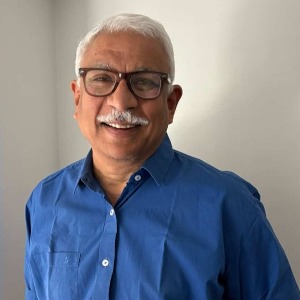
Narendra Chirmule
Indian Institute of Technology (IIT), India
Thomas J Webster
Brown University, United States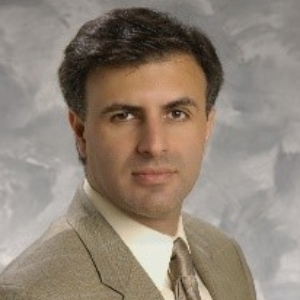
Babak Faramarzi
Western University of Health Sciences, United States
Zuchang Pei
Independent Researcher, Canada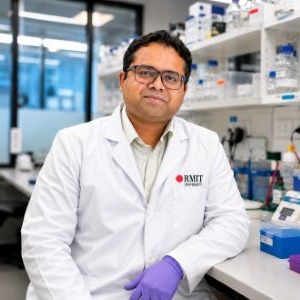
Md Monir Hossain
RMIT University, Australia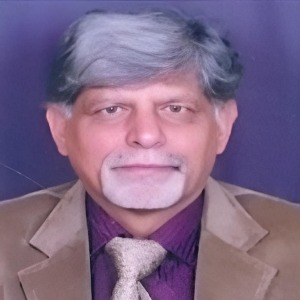
K R Aneja
Kurukshetra University, India
Santosh Kumar Mishra
S.N.D.T. Women's University (Retired), IndiaSubmit your abstract Today


Title : Why do 90% of the drugs fail in development? An analysis of 82+ submissions; and a case study of immunotherapy
Narendra Chirmule, Indian Institute of Technology (IIT), India
Title : Eliminating implant failure in humans with nano chemistry: 45,000 cases and counting
Thomas J Webster, Brown University, United States
Title : Evaluating cell compatibility and subcutaneous host response of silk fibroin–chitosan plug composites as potential resorbable implants
Luis Jesus Villarreal Gomez, Universidad Autonoma de Baja California, Mexico
Title : Steps and strides: Cross-species insights into movement and injury
Babak Faramarzi, Western University of Health Sciences, United States
Title : Ancient wisdom, modern science: Biotech services transforming ayurveda
Prashant Sakharam Bhokardankar, Datta Meghe Ayurvedic Medical College Hospital and Research Centre, India
Title : Scientist’s computational lawyer
Julia Sidorova, Instituto Carlos III de Salud (CIBER-EHD), Spain