6th Edition of Euro-Global Conference on Biotechnology and Bioengineering
September 28-30 | Hybrid Event

Synthetic Biology & Systems Biology
By merging engineering principles with biology, synthetic biology & systems biology opens vast possibilities for designing new biological parts and reconstructing complex cellular networks. Synthetic biology is enabling the construction of artificial life forms, gene circuits, and programmable cells that serve targeted roles in diagnostics, therapy, and environmental sensing. Meanwhile, systems biology dissects intricate interconnections within living organisms using quantitative models and high-throughput data analysis. Together, these disciplines provide a holistic approach to understanding and redesigning biological functions. They support innovations in bioenergy, environmental engineering, and microbial production systems, often guided by AI and machine learning tools. The collaborative synergy of Synthetic Biology & Systems Biology lays the groundwork for predictive, customizable, and scalable biotechnological applications across multiple domains.
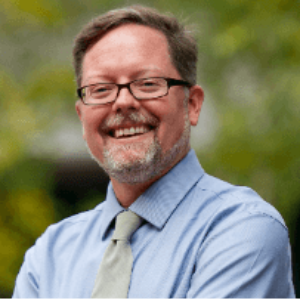
Thomas J Webster
Brown University, United States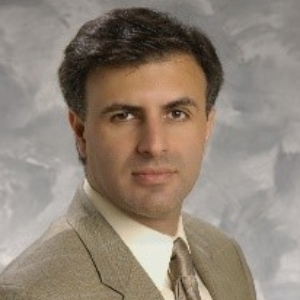
Babak Faramarzi
Western University of Health Sciences, United States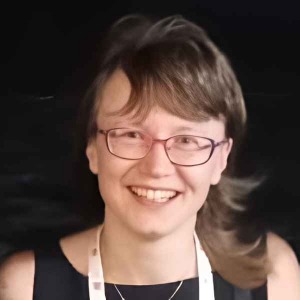
Julia Sidorova
Instituto Carlos III de Salud (CIBER-EHD), Spain
Zuchang Pei
Independent Researcher, Canada
Md Monir Hossain
RMIT University, Australia
Santosh Kumar Mishra
S.N.D.T. Women's University (Retired), India
Koustav Sarkar
SRM Institute of Science and Technology, IndiaSubmit your abstract Today


Title : Why do 90% of the drugs fail in development? An analysis of 82+ submissions; and a case study of immunotherapy
Narendra Chirmule, Indian Institute of Technology (IIT), India
Title : Eliminating implant failure in humans with nano chemistry: 45,000 cases and counting
Thomas J Webster, Brown University, United States
Title : Evaluating cell compatibility and subcutaneous host response of silk fibroin–chitosan plug composites as potential resorbable implants
Luis Jesus Villarreal Gomez, Universidad Autonoma de Baja California, Mexico
Title : Steps and strides: Cross-species insights into movement and injury
Babak Faramarzi, Western University of Health Sciences, United States
Title : Ancient wisdom, modern science: Biotech services transforming ayurveda
Prashant Sakharam Bhokardankar, Datta Meghe Ayurvedic Medical College Hospital and Research Centre, India
Title : Scientist’s computational lawyer
Julia Sidorova, Instituto Carlos III de Salud (CIBER-EHD), Spain