
6th Edition of Euro-Global Conference on Biotechnology and Bioengineering
September 28-30 | Hybrid Event

Bioinformatics Specialists
Bioinformatics Specialists combine computer science, biology, and mathematics to process and interpret complex biological data. They play a crucial role in the field of biotechnology, where large-scale data sets, such as genomic sequences, protein structures, and metabolic pathways, need to be processed and understood. By applying algorithms and statistical methods, bioinformatics specialists help uncover patterns and insights that are essential for advancing medical research, drug discovery, and personalized medicine. Their work supports the development of targeted therapies and the identification of disease markers by analyzing genetic data, thus paving the way for more effective treatments.
Their contributions to healthcare, bioinformatics specialists also work in agriculture, helping to improve crop yields and resistance to diseases by analyzing plant genomes. They are also involved in environmental biotechnology, where they analyze microbial communities and ecosystems, assisting in areas such as bioremediation and biodiversity conservation. These specialists rely on powerful computational tools, including machine learning, to analyze vast amounts of biological data quickly and accurately. By collaborating with biologists, chemists, and clinicians, bioinformatics specialists enable breakthroughs that would be nearly impossible with traditional laboratory techniques. As the field of bioinformatics continues to grow, these professionals remain at the forefront of innovations that are revolutionizing healthcare, agriculture, and environmental sciences.
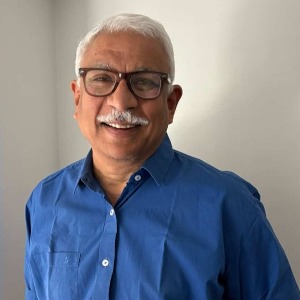
Narendra Chirmule
Indian Institute of Technology (IIT), India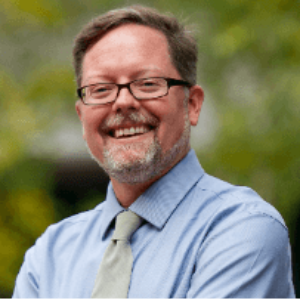
Thomas J Webster
Brown University, United States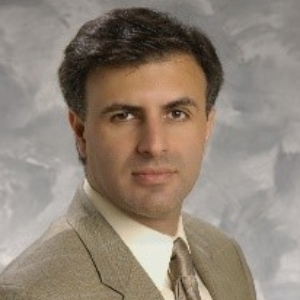
Babak Faramarzi
Western University of Health Sciences, United States
Zuchang Pei
Independent Researcher, Canada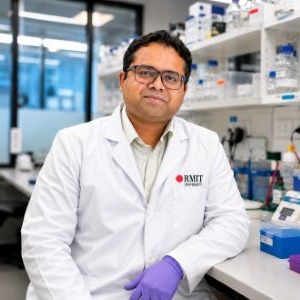
Md Monir Hossain
RMIT University, Australia
K R Aneja
Kurukshetra University, India
Santosh Kumar Mishra
S.N.D.T. Women's University (Retired), IndiaSubmit your abstract Today


Title : Why do 90% of the drugs fail in development? An analysis of 82+ submissions; and a case study of immunotherapy
Narendra Chirmule, Indian Institute of Technology (IIT), India
Title : Eliminating implant failure in humans with nano chemistry: 45,000 cases and counting
Thomas J Webster, Brown University, United States
Title : Evaluating cell compatibility and subcutaneous host response of silk fibroin–chitosan plug composites as potential resorbable implants
Luis Jesus Villarreal Gomez, Universidad Autonoma de Baja California, Mexico
Title : Steps and strides: Cross-species insights into movement and injury
Babak Faramarzi, Western University of Health Sciences, United States
Title : Ancient wisdom, modern science: Biotech services transforming ayurveda
Prashant Sakharam Bhokardankar, Datta Meghe Ayurvedic Medical College Hospital and Research Centre, India
Title : Scientist’s computational lawyer
Julia Sidorova, Instituto Carlos III de Salud (CIBER-EHD), Spain