
6th Edition of Euro-Global Conference on Biotechnology and Bioengineering
September 28-30 | Hybrid Event

Bioinspired Design
Bioinspired Design, also known as biomimicry, draws inspiration from nature to solve human problems and create innovative solutions. By observing and studying biological systems, such as plants, animals, and ecosystems, engineers and designers can adapt nature's strategies to develop more efficient, sustainable, and resilient technologies. For example, the study of bird flight has led to the development of more aerodynamic aircraft designs. Similarly, the structure of spider silk has inspired the creation of stronger and more flexible materials. Biomimicry not only enhances technological advancements but also promotes a deeper understanding and appreciation of the natural world. By emulating nature's time-tested solutions, bioinspired design offers a promising pathway towards addressing complex challenges in fields ranging from architecture and medicine to transportation and energy. As we continue to uncover the mysteries of the natural world, the potential for bioinspired innovation is limitless, offering hope for a more harmonious relationship between humanity and the environment.
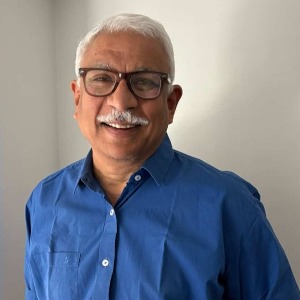
Narendra Chirmule
Indian Institute of Technology (IIT), India
Thomas J Webster
Brown University, United States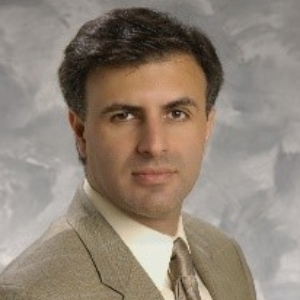
Babak Faramarzi
Western University of Health Sciences, United States
Zuchang Pei
Independent Researcher, Canada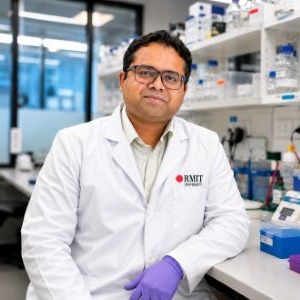
Md Monir Hossain
RMIT University, Australia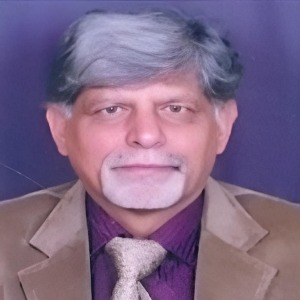
K R Aneja
Kurukshetra University, India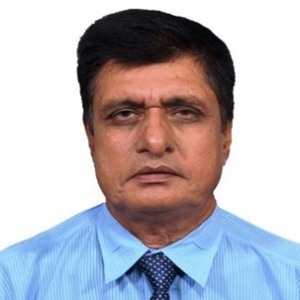
Santosh Kumar Mishra
S.N.D.T. Women's University (Retired), IndiaSubmit your abstract Today


Title : Why do 90% of the drugs fail in development? An analysis of 82+ submissions; and a case study of immunotherapy
Narendra Chirmule, Indian Institute of Technology (IIT), India
Title : Eliminating implant failure in humans with nano chemistry: 45,000 cases and counting
Thomas J Webster, Brown University, United States
Title : Evaluating cell compatibility and subcutaneous host response of silk fibroin–chitosan plug composites as potential resorbable implants
Luis Jesus Villarreal Gomez, Universidad Autonoma de Baja California, Mexico
Title : Steps and strides: Cross-species insights into movement and injury
Babak Faramarzi, Western University of Health Sciences, United States
Title : Ancient wisdom, modern science: Biotech services transforming ayurveda
Prashant Sakharam Bhokardankar, Datta Meghe Ayurvedic Medical College Hospital and Research Centre, India
Title : Scientist’s computational lawyer
Julia Sidorova, Instituto Carlos III de Salud (CIBER-EHD), Spain