
6th Edition of Euro-Global Conference on Biotechnology and Bioengineering
September 28-30 | Hybrid Event

Biological Technician
A Biological Technician supports scientific research by preparing and maintaining laboratory equipment, samples, and specimens for analysis. They perform routine experiments, collect data, and ensure that laboratory procedures are followed accurately and safely. Their daily tasks often include culturing cells, preparing chemical solutions, and monitoring experimental conditions to maintain consistency. Precision and strong organizational skills are essential, as the quality of experimental results depends heavily on the technician’s attention to detail. Biological Technicians work closely with scientists and researchers to assist in the development of new methods and protocols. Their work often requires adaptability to handle a variety of projects and unexpected challenges efficiently.
These technicians are responsible for maintaining detailed records, managing inventory, and troubleshooting equipment issues. They often play a critical role in ensuring compliance with safety regulations and quality control standards. As research methods and technologies advance, Biological Technicians continuously update their skills to support complex experiments. Their ability to communicate clearly and collaborate with diverse teams enhances the efficiency and success of scientific projects. Their contribution is vital to progressing research in fields ranging from medicine to environmental science. Strong problem-solving skills and a commitment to accuracy further enable them to contribute meaningfully to scientific breakthroughs.
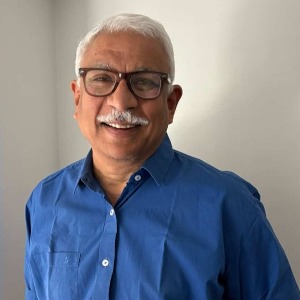
Narendra Chirmule
Indian Institute of Technology (IIT), India
Thomas J Webster
Brown University, United States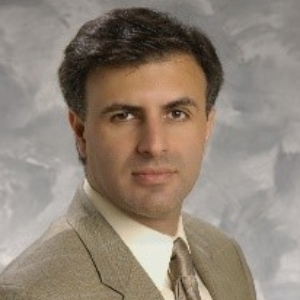
Babak Faramarzi
Western University of Health Sciences, United States
Zuchang Pei
Independent Researcher, Canada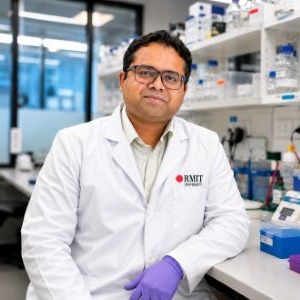
Md Monir Hossain
RMIT University, Australia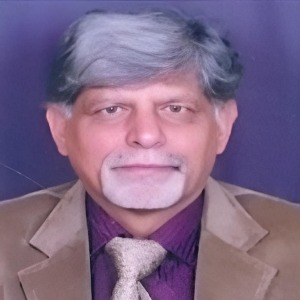
K R Aneja
Kurukshetra University, India
Santosh Kumar Mishra
S.N.D.T. Women's University (Retired), IndiaSubmit your abstract Today


Title : Why do 90% of the drugs fail in development? An analysis of 82+ submissions; and a case study of immunotherapy
Narendra Chirmule, Indian Institute of Technology (IIT), India
Title : Eliminating implant failure in humans with nano chemistry: 45,000 cases and counting
Thomas J Webster, Brown University, United States
Title : Evaluating cell compatibility and subcutaneous host response of silk fibroin–chitosan plug composites as potential resorbable implants
Luis Jesus Villarreal Gomez, Universidad Autonoma de Baja California, Mexico
Title : Steps and strides: Cross-species insights into movement and injury
Babak Faramarzi, Western University of Health Sciences, United States
Title : Ancient wisdom, modern science: Biotech services transforming ayurveda
Prashant Sakharam Bhokardankar, Datta Meghe Ayurvedic Medical College Hospital and Research Centre, India
Title : Scientist’s computational lawyer
Julia Sidorova, Instituto Carlos III de Salud (CIBER-EHD), Spain