
6th Edition of Euro-Global Conference on Biotechnology and Bioengineering
September 28-30 | Hybrid Event

Biosensor Developers
Biosensor Developers are experts who design and create devices that detect and measure biological substances, providing essential data for various applications in medicine, environmental monitoring, and food safety. By combining biological components—such as enzymes, antibodies, or nucleic acids—with electronic systems, these professionals create sensors capable of detecting specific biomolecules, pathogens, or environmental contaminants. Their work is critical in advancing diagnostics, offering rapid, reliable, and often non-invasive testing methods that are essential for disease detection, personalized healthcare, and environmental protection.
In the medical field, biosensor developers play a crucial role in designing point-of-care devices that provide real-time, on-site analysis, allowing for quicker diagnoses and treatment decisions. They work on creating portable, easy-to-use devices for monitoring chronic conditions like diabetes or cardiovascular disease. Additionally, biosensors are integral in detecting infections, pathogens, or biomarkers for cancer, enabling early detection and improving patient outcomes. Beyond healthcare, biosensor developers also work on environmental sensors that can monitor pollutants in air, water, and soil, providing data crucial for pollution control and environmental conservation. They contribute to food safety by developing sensors that detect harmful substances, pathogens, or contaminants in food products. Through their innovations, biosensor developers enhance public health, environmental sustainability, and overall safety in various industries, driving improvements in efficiency and accuracy across many sectors.
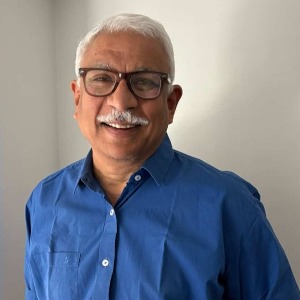
Narendra Chirmule
Indian Institute of Technology (IIT), India
Thomas J Webster
Brown University, United States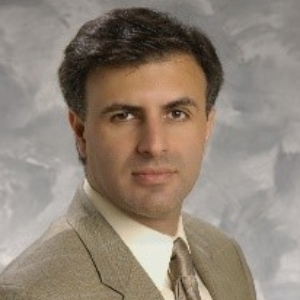
Babak Faramarzi
Western University of Health Sciences, United States
Zuchang Pei
Independent Researcher, Canada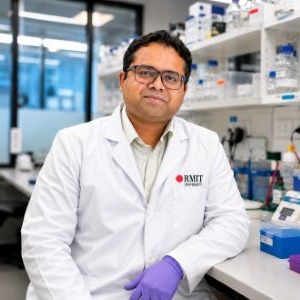
Md Monir Hossain
RMIT University, Australia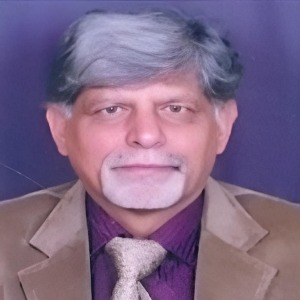
K R Aneja
Kurukshetra University, India
Santosh Kumar Mishra
S.N.D.T. Women's University (Retired), IndiaSubmit your abstract Today


Title : Why do 90% of the drugs fail in development? An analysis of 82+ submissions; and a case study of immunotherapy
Narendra Chirmule, Indian Institute of Technology (IIT), India
Title : Eliminating implant failure in humans with nano chemistry: 45,000 cases and counting
Thomas J Webster, Brown University, United States
Title : Evaluating cell compatibility and subcutaneous host response of silk fibroin–chitosan plug composites as potential resorbable implants
Luis Jesus Villarreal Gomez, Universidad Autonoma de Baja California, Mexico
Title : Steps and strides: Cross-species insights into movement and injury
Babak Faramarzi, Western University of Health Sciences, United States
Title : Ancient wisdom, modern science: Biotech services transforming ayurveda
Prashant Sakharam Bhokardankar, Datta Meghe Ayurvedic Medical College Hospital and Research Centre, India
Title : Scientist’s computational lawyer
Julia Sidorova, Instituto Carlos III de Salud (CIBER-EHD), Spain