
6th Edition of Euro-Global Conference on Biotechnology and Bioengineering
September 28-30 | Hybrid Event

Cell Culture
Cell Culture is a fundamental technique in biotechnology and biomedical research, involving the growth and maintenance of cells outside their natural environment. This process allows scientists to study cellular behaviour, function, and responses to various stimuli in a controlled laboratory setting. Cells cultured in vitro provide valuable insights into basic biological processes, disease mechanisms, drug development, and tissue engineering. In cell culture, cells are typically grown in a nutrient-rich medium containing essential nutrients, growth factors, and hormones necessary for their survival and proliferation. The environment is carefully controlled, with parameters such as temperature, pH, and oxygen levels maintained to mimic physiological conditions. Various types of cell cultures exist, including adherent cultures, where cells attach to a substrate, and suspension cultures, where cells grow freely in the medium. Primary cell cultures derived directly from tissues and organs and immortalized cell lines, which have undergone genetic modifications to enable indefinite growth, are commonly used in research. Cell culture techniques are utilized across diverse fields, including cancer research, regenerative medicine, vaccine development, and biopharmaceutical production. They serve as essential tools for studying cellular interactions, signaling pathways, and disease mechanisms, paving the way for the development of novel therapies and treatment strategies. Despite its importance, cell culture can be challenging, requiring strict aseptic techniques to prevent contamination and meticulous monitoring of cell growth and behaviour.
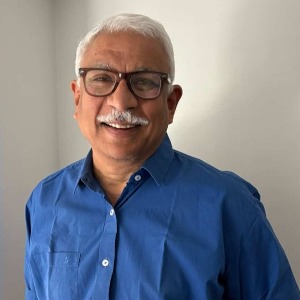
Narendra Chirmule
Indian Institute of Technology (IIT), India
Thomas J Webster
Brown University, United States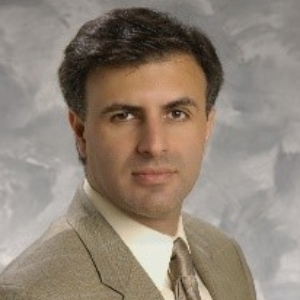
Babak Faramarzi
Western University of Health Sciences, United States
Zuchang Pei
Independent Researcher, Canada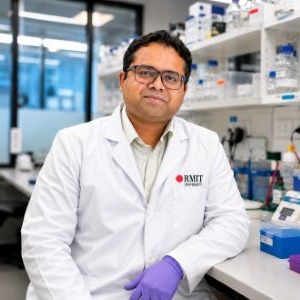
Md Monir Hossain
RMIT University, Australia
K R Aneja
Kurukshetra University, India
Santosh Kumar Mishra
S.N.D.T. Women's University (Retired), IndiaSubmit your abstract Today


Title : Why do 90% of the drugs fail in development? An analysis of 82+ submissions; and a case study of immunotherapy
Narendra Chirmule, Indian Institute of Technology (IIT), India
Title : Eliminating implant failure in humans with nano chemistry: 45,000 cases and counting
Thomas J Webster, Brown University, United States
Title : Evaluating cell compatibility and subcutaneous host response of silk fibroin–chitosan plug composites as potential resorbable implants
Luis Jesus Villarreal Gomez, Universidad Autonoma de Baja California, Mexico
Title : Steps and strides: Cross-species insights into movement and injury
Babak Faramarzi, Western University of Health Sciences, United States
Title : Ancient wisdom, modern science: Biotech services transforming ayurveda
Prashant Sakharam Bhokardankar, Datta Meghe Ayurvedic Medical College Hospital and Research Centre, India
Title : Scientist’s computational lawyer
Julia Sidorova, Instituto Carlos III de Salud (CIBER-EHD), Spain