
6th Edition of Euro-Global Conference on Biotechnology and Bioengineering
September 28-30 | Hybrid Event

Enzyme Engineering
Enzyme Engineering stands at the forefront of biotechnology, offering a powerful toolkit for tailoring enzymatic properties to meet diverse industrial and biomedical needs. This discipline encompasses the design, modification, and optimization of enzymes through genetic, protein engineering, and directed evolution approaches. By manipulating enzyme structure and function, scientists can enhance catalytic efficiency, substrate specificity, stability, and tolerance to extreme conditions. Enzyme engineering holds immense promise across a spectrum of applications, including biocatalysis, biotransformation, biofuel production, pharmaceutical synthesis, and environmental remediation. Through rational design or directed evolution strategies, enzymes can be customized to perform specific tasks with unprecedented precision and efficacy. Moreover, enzyme engineering enables the creation of novel biocatalysts capable of catalyzing reactions that are otherwise inaccessible or inefficient with naturally occurring enzymes. This technology has revolutionized industries by enabling cleaner and more sustainable manufacturing processes, reducing energy consumption and waste generation. In the pharmaceutical sector, engineered enzymes play a crucial role in drug discovery, development, and production, accelerating the synthesis of complex molecules and improving therapeutic outcomes. Additionally, enzyme engineering holds promise for personalized medicine, where tailored enzymes could target specific disease pathways with enhanced efficacy and minimal side effects.

Thomas J Webster
Brown University, United States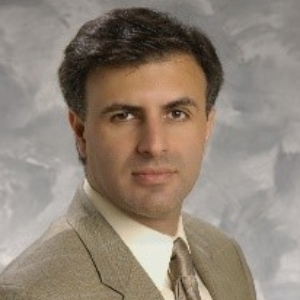
Babak Faramarzi
Western University of Health Sciences, United States
Julia Sidorova
Instituto Carlos III de Salud (CIBER-EHD), Spain
Zuchang Pei
Independent Researcher, Canada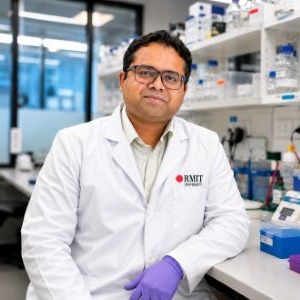
Md Monir Hossain
RMIT University, Australia
Santosh Kumar Mishra
S.N.D.T. Women's University (Retired), India
Koustav Sarkar
SRM Institute of Science and Technology, IndiaSubmit your abstract Today


Title : Why do 90% of the drugs fail in development? An analysis of 82+ submissions; and a case study of immunotherapy
Narendra Chirmule, Indian Institute of Technology (IIT), India
Title : Eliminating implant failure in humans with nano chemistry: 45,000 cases and counting
Thomas J Webster, Brown University, United States
Title : Evaluating cell compatibility and subcutaneous host response of silk fibroin–chitosan plug composites as potential resorbable implants
Luis Jesus Villarreal Gomez, Universidad Autonoma de Baja California, Mexico
Title : Steps and strides: Cross-species insights into movement and injury
Babak Faramarzi, Western University of Health Sciences, United States
Title : Ancient wisdom, modern science: Biotech services transforming ayurveda
Prashant Sakharam Bhokardankar, Datta Meghe Ayurvedic Medical College Hospital and Research Centre, India
Title : Scientist’s computational lawyer
Julia Sidorova, Instituto Carlos III de Salud (CIBER-EHD), Spain