
6th Edition of Euro-Global Conference on Biotechnology and Bioengineering
September 28-30 | Hybrid Event

Enzymes
Enzymes are remarkable biological catalysts essential for numerous biochemical reactions within living organisms. These proteins accelerate the rate of reactions by lowering the activation energy required for a reaction to occur, thereby facilitating cellular processes. Enzymes exhibit remarkable specificity, recognizing and binding to specific substrates with high affinity at their active sites. This specificity ensures that reactions proceed with precision and efficiency. Enzyme activity is highly regulated, often through allosteric modulation or post-translational modifications, allowing for dynamic control of cellular processes in response to changing environmental conditions. The catalytic mechanism of enzymes involves the formation of enzyme-substrate complexes, where substrates are bound to the active site through various interactions such as hydrogen bonding, electrostatic interactions, and hydrophobic interactions. Once bound, enzymes facilitate the conversion of substrates into products by stabilizing transition states or providing alternative reaction pathways. Enzymes can also undergo conformational changes upon substrate binding, further enhancing catalytic efficiency. Enzymes play crucial roles in metabolism, including digestion, energy production, and biosynthesis of essential molecules. For example, digestive enzymes like amylase, protease, and lipase break down carbohydrates, proteins, and fats, respectively, into smaller molecules for absorption. Enzymes involved in cellular respiration, such as ATP synthase and cytochrome c oxidase, generate ATP, the universal energy currency of cells. Moreover, enzymes are indispensable in genetic processes, including DNA replication, transcription, and translation.

Narendra Chirmule
Indian Institute of Technology (IIT), India
Thomas J Webster
Brown University, United States
Babak Faramarzi
Western University of Health Sciences, United States
Zuchang Pei
Independent Researcher, Canada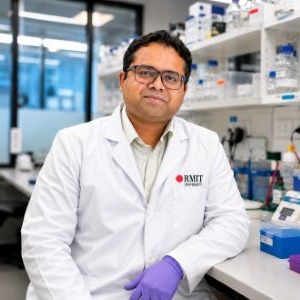
Md Monir Hossain
RMIT University, Australia
K R Aneja
Kurukshetra University, India
Santosh Kumar Mishra
S.N.D.T. Women's University (Retired), IndiaSubmit your abstract Today


Title : Why do 90% of the drugs fail in development? An analysis of 82+ submissions; and a case study of immunotherapy
Narendra Chirmule, Indian Institute of Technology (IIT), India
Title : Eliminating implant failure in humans with nano chemistry: 45,000 cases and counting
Thomas J Webster, Brown University, United States
Title : Evaluating cell compatibility and subcutaneous host response of silk fibroin–chitosan plug composites as potential resorbable implants
Luis Jesus Villarreal Gomez, Universidad Autonoma de Baja California, Mexico
Title : Steps and strides: Cross-species insights into movement and injury
Babak Faramarzi, Western University of Health Sciences, United States
Title : Ancient wisdom, modern science: Biotech services transforming ayurveda
Prashant Sakharam Bhokardankar, Datta Meghe Ayurvedic Medical College Hospital and Research Centre, India
Title : Scientist’s computational lawyer
Julia Sidorova, Instituto Carlos III de Salud (CIBER-EHD), Spain