
6th Edition of Euro-Global Conference on Biotechnology and Bioengineering
September 28-30 | Hybrid Event

Food and Agricultural Biotechnology
Food and Agricultural Biotechnology represents a transformative field at the intersection of biology, genetics, and agriculture, aiming to address global challenges in food production, nutrition, and sustainability. Through innovative techniques and genetic manipulation, biotechnology offers solutions to enhance crop yields, improve resistance to pests and diseases, and optimize nutritional content. Genetic engineering allows for the development of genetically modified organisms (GMOs) with desirable traits, such as drought tolerance, herbicide resistance, and enhanced nutritional profiles. These advancements have the potential to revolutionize agriculture by increasing productivity while minimizing environmental impact. One key application of food and agricultural biotechnology is the development of genetically modified crops, which have been engineered to exhibit traits beneficial to farmers and consumers alike. For example, insect-resistant crops can reduce the need for chemical pesticides, leading to lower environmental pollution and improved safety for farmworkers and consumers. Similarly, crops engineered for increased tolerance to herbicides allow for more efficient weed control, thereby enhancing crop yields and reducing labor costs. Furthermore, biotechnology plays a crucial role in the production of biofuels, offering renewable alternatives to fossil fuels. By utilizing genetically modified microorganisms or crops rich in fermentable sugars, biofuel production can be scaled up to meet energy demands while reducing greenhouse gas emissions and reliance on finite resources.

Thomas J Webster
Brown University, United States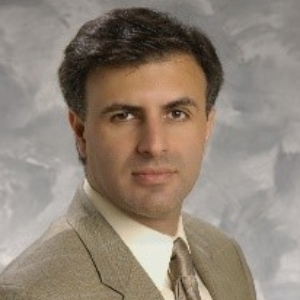
Babak Faramarzi
Western University of Health Sciences, United States
Julia Sidorova
Instituto Carlos III de Salud (CIBER-EHD), Spain
Zuchang Pei
Independent Researcher, Canada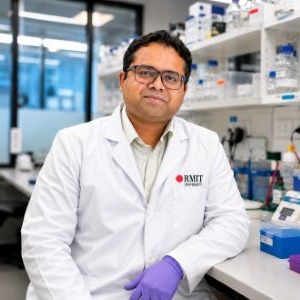
Md Monir Hossain
RMIT University, Australia
Santosh Kumar Mishra
S.N.D.T. Women's University (Retired), India
Koustav Sarkar
SRM Institute of Science and Technology, IndiaSubmit your abstract Today


Title : Why do 90% of the drugs fail in development? An analysis of 82+ submissions; and a case study of immunotherapy
Narendra Chirmule, Indian Institute of Technology (IIT), India
Title : Eliminating implant failure in humans with nano chemistry: 45,000 cases and counting
Thomas J Webster, Brown University, United States
Title : Evaluating cell compatibility and subcutaneous host response of silk fibroin–chitosan plug composites as potential resorbable implants
Luis Jesus Villarreal Gomez, Universidad Autonoma de Baja California, Mexico
Title : Steps and strides: Cross-species insights into movement and injury
Babak Faramarzi, Western University of Health Sciences, United States
Title : Ancient wisdom, modern science: Biotech services transforming ayurveda
Prashant Sakharam Bhokardankar, Datta Meghe Ayurvedic Medical College Hospital and Research Centre, India
Title : Scientist’s computational lawyer
Julia Sidorova, Instituto Carlos III de Salud (CIBER-EHD), Spain