6th Edition of Euro-Global Conference on Biotechnology and Bioengineering
September 28-30 | Hybrid Event

Genomics Scientist
A Genomics Scientist focuses on studying the complete set of DNA within an organism, aiming to understand its structure, function, and variation. Their work involves sequencing genomes, analyzing genetic data, and identifying gene functions to reveal how genetic information influences traits, health, and disease. Utilizing cutting-edge technologies such as next-generation sequencing and bioinformatics tools, they decode vast amounts of genetic data to uncover mutations, genetic markers, and evolutionary patterns. Their research provides critical insights that support personalized medicine, enabling treatments tailored to an individual’s genetic makeup. Careful attention and strong analytical abilities are crucial for accurately managing and interpreting complex datasets.
Their ability to stay updated with rapidly evolving technologies ensures continued innovation in the field. Genomics Scientist designs experiments to explore gene expression, regulation, and interaction networks. They often collaborate with clinicians, computational biologists, and other researchers to integrate genomic information with clinical and environmental data. Advances in CRISPR and other gene-editing techniques have expanded their role to include developing novel methods for modifying genetic material safely and effectively. Their contributions are vital to advancing the understanding of inherited diseases, cancer biology, and population genetics. Effective communication is also important, as explaining genetic findings to non-specialists can influence healthcare decisions and public policy.

Narendra Chirmule
Indian Institute of Technology (IIT), India
Thomas J Webster
Brown University, United States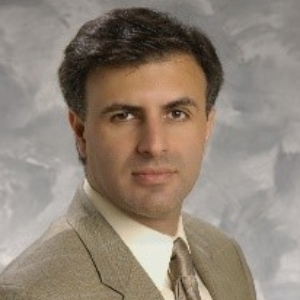
Babak Faramarzi
Western University of Health Sciences, United States
Zuchang Pei
Independent Researcher, Canada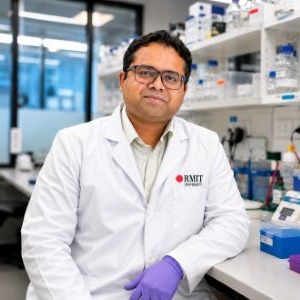
Md Monir Hossain
RMIT University, Australia
K R Aneja
Kurukshetra University, India
Santosh Kumar Mishra
S.N.D.T. Women's University (Retired), IndiaSubmit your abstract Today


Title : Why do 90% of the drugs fail in development? An analysis of 82+ submissions; and a case study of immunotherapy
Narendra Chirmule, Indian Institute of Technology (IIT), India
Title : Eliminating implant failure in humans with nano chemistry: 45,000 cases and counting
Thomas J Webster, Brown University, United States
Title : Evaluating cell compatibility and subcutaneous host response of silk fibroin–chitosan plug composites as potential resorbable implants
Luis Jesus Villarreal Gomez, Universidad Autonoma de Baja California, Mexico
Title : Steps and strides: Cross-species insights into movement and injury
Babak Faramarzi, Western University of Health Sciences, United States
Title : Ancient wisdom, modern science: Biotech services transforming ayurveda
Prashant Sakharam Bhokardankar, Datta Meghe Ayurvedic Medical College Hospital and Research Centre, India
Title : Scientist’s computational lawyer
Julia Sidorova, Instituto Carlos III de Salud (CIBER-EHD), Spain