
6th Edition of Euro-Global Conference on Biotechnology and Bioengineering
September 28-30 | Hybrid Event

Synthetic Researchers
Synthetic Researchers work on designing and creating new molecules and materials through chemical synthesis. They use their knowledge of chemical reactions and molecular structures to build compounds that have specific properties for applications in areas such as pharmaceuticals, materials science, and industrial chemistry. Their tasks include developing efficient and reproducible synthetic methods, optimizing reaction conditions, and ensuring the purity and stability of the products. Creativity, strong analytical skills, and attention to detail are essential to overcome challenges in complex syntheses and scaling production processes. They often experiment with novel catalysts and reaction conditions to improve yields and reduce environmental impact. Staying up to date with advances in synthetic methodologies allows them to innovate and refine their techniques.
Synthetic Researchers collaborate with experts from various fields to test and apply their synthesized compounds. They evaluate the physical, chemical, and functional properties of these materials to determine their suitability for uses like drug development, new polymers, or catalysts that enhance industrial processes. Problem-solving skills and methodical approaches help them troubleshoot issues and improve synthesis techniques. Their contributions push the boundaries of molecular science, driving innovations that benefit medicine, technology, and environmental sustainability. Effective communication and teamwork are also important, as they often work within interdisciplinary groups to translate research into practical solutions.
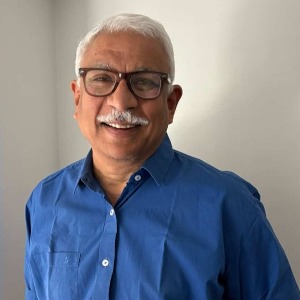
Narendra Chirmule
Indian Institute of Technology (IIT), India
Thomas J Webster
Brown University, United States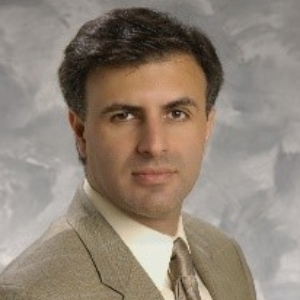
Babak Faramarzi
Western University of Health Sciences, United States
Zuchang Pei
Independent Researcher, Canada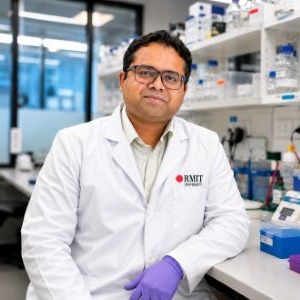
Md Monir Hossain
RMIT University, Australia
K R Aneja
Kurukshetra University, India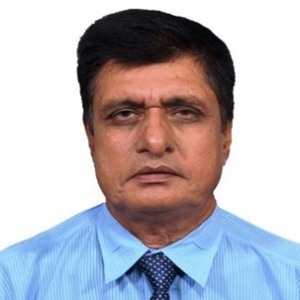
Santosh Kumar Mishra
S.N.D.T. Women's University (Retired), IndiaSubmit your abstract Today


Title : Why do 90% of the drugs fail in development? An analysis of 82+ submissions; and a case study of immunotherapy
Narendra Chirmule, Indian Institute of Technology (IIT), India
Title : Eliminating implant failure in humans with nano chemistry: 45,000 cases and counting
Thomas J Webster, Brown University, United States
Title : Evaluating cell compatibility and subcutaneous host response of silk fibroin–chitosan plug composites as potential resorbable implants
Luis Jesus Villarreal Gomez, Universidad Autonoma de Baja California, Mexico
Title : Steps and strides: Cross-species insights into movement and injury
Babak Faramarzi, Western University of Health Sciences, United States
Title : Ancient wisdom, modern science: Biotech services transforming ayurveda
Prashant Sakharam Bhokardankar, Datta Meghe Ayurvedic Medical College Hospital and Research Centre, India
Title : Scientist’s computational lawyer
Julia Sidorova, Instituto Carlos III de Salud (CIBER-EHD), Spain