
6th Edition of Euro-Global Conference on Biotechnology and Bioengineering
September 28-30 | Hybrid Event

Systems Microbiology and Biomanufacturing
Systems Microbiology and Biomanufacturing represent cutting-edge fields at the intersection of microbiology, engineering, and biotechnology, revolutionizing how we understand and utilize microbial systems for industrial applications. In systems microbiology, researchers explore the intricate networks and interactions within microbial communities, leveraging advanced techniques such as omics technologies and computational modeling to unravel complex biological processes. By elucidating these systems-level dynamics, scientists gain insights into microbial behaviour, metabolism, and ecological roles, paving the way for tailored interventions and biotechnological innovations. Biomanufacturing, on the other hand, focuses on harnessing microbial capabilities to produce valuable compounds, materials, and biofuels on an industrial scale. Through genetic engineering, metabolic engineering, and synthetic biology approaches, microbes are engineered to serve as efficient "cell factories," converting renewable resources into desired products with high yield and purity. This sustainable approach to manufacturing offers numerous advantages, including reduced environmental impact, lower production costs, and the potential for customization and scalability. Together, systems microbiology and biomanufacturing drive advancements in various sectors, from pharmaceuticals and healthcare to agriculture and energy. By understanding microbial systems at a holistic level and leveraging their metabolic potential, researchers can develop novel biotechnological solutions to address global challenges such as disease treatment, food security, and environmental sustainability.
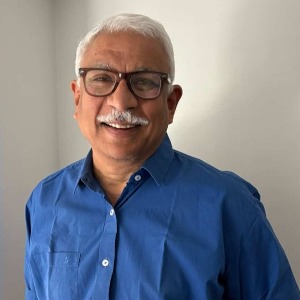
Narendra Chirmule
Indian Institute of Technology (IIT), India
Thomas J Webster
Brown University, United States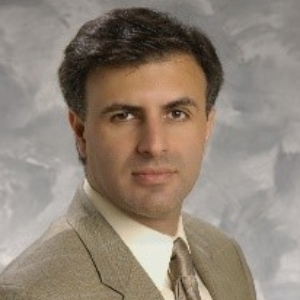
Babak Faramarzi
Western University of Health Sciences, United States
Zuchang Pei
Independent Researcher, Canada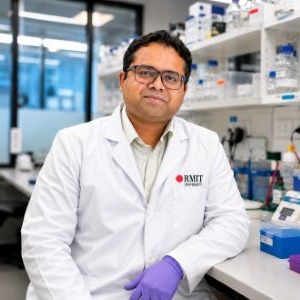
Md Monir Hossain
RMIT University, Australia
K R Aneja
Kurukshetra University, India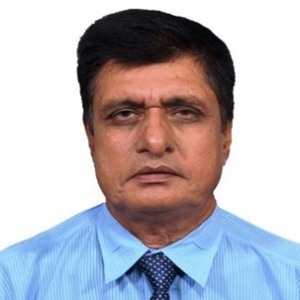
Santosh Kumar Mishra
S.N.D.T. Women's University (Retired), IndiaSubmit your abstract Today


Title : Why do 90% of the drugs fail in development? An analysis of 82+ submissions; and a case study of immunotherapy
Narendra Chirmule, Indian Institute of Technology (IIT), India
Title : Eliminating implant failure in humans with nano chemistry: 45,000 cases and counting
Thomas J Webster, Brown University, United States
Title : Evaluating cell compatibility and subcutaneous host response of silk fibroin–chitosan plug composites as potential resorbable implants
Luis Jesus Villarreal Gomez, Universidad Autonoma de Baja California, Mexico
Title : Steps and strides: Cross-species insights into movement and injury
Babak Faramarzi, Western University of Health Sciences, United States
Title : Ancient wisdom, modern science: Biotech services transforming ayurveda
Prashant Sakharam Bhokardankar, Datta Meghe Ayurvedic Medical College Hospital and Research Centre, India
Title : Scientist’s computational lawyer
Julia Sidorova, Instituto Carlos III de Salud (CIBER-EHD), Spain