
6th Edition of Euro-Global Conference on Biotechnology and Bioengineering
September 28-30 | Hybrid Event

Tissue Engineers
Tissue Engineers play a critical role in advancing regenerative medicine by creating biological materials that can support or replace damaged tissues in the body. Their work involves integrating principles of cell biology, materials design, and mechanical engineering to construct frameworks that support the growth and development of new tissue. A key part of their process is developing scaffolds — structures that mimic the extracellular matrix — which serve as a temporary support system where cells can attach, grow, and form functional tissue. These scaffolds must be biocompatible, biodegradable, and able to support cellular activities like adhesion, proliferation, and differentiation. To ensure success, tissue engineers also study how different materials interact with living cells and fine-tune the physical and chemical properties of the scaffolds accordingly.
In clinical settings, these experts contribute to innovations such as engineered skin for wound healing, cartilage repair solutions, and the development of vascular grafts. They often rely on cutting-edge technologies like 3D bioprinting and microfluidic systems to create more complex and precise tissue structures. The goal is not only to restore lost function but also to improve the quality of life for patients who suffer from chronic conditions or injuries. As their methods become more refined and scalable, tissue engineers are expected to revolutionize how we approach medical treatment, potentially reducing the dependence on donor organs and long-term medical devices.
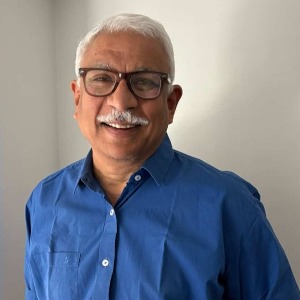
Narendra Chirmule
Indian Institute of Technology (IIT), India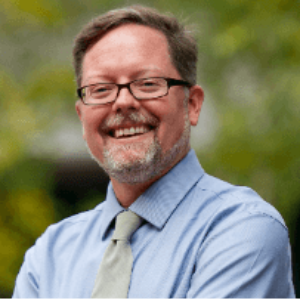
Thomas J Webster
Brown University, United States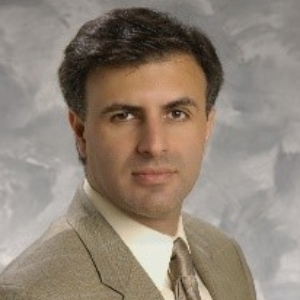
Babak Faramarzi
Western University of Health Sciences, United States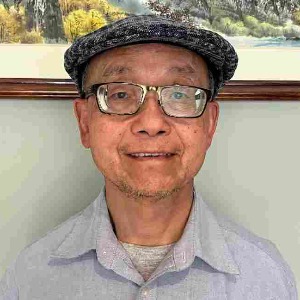
Zuchang Pei
Independent Researcher, Canada
Md Monir Hossain
RMIT University, Australia
K R Aneja
Kurukshetra University, India
Santosh Kumar Mishra
S.N.D.T. Women's University (Retired), IndiaSubmit your abstract Today


Title : Why do 90% of the drugs fail in development? An analysis of 82+ submissions; and a case study of immunotherapy
Narendra Chirmule, Indian Institute of Technology (IIT), India
Title : Eliminating implant failure in humans with nano chemistry: 45,000 cases and counting
Thomas J Webster, Brown University, United States
Title : Evaluating cell compatibility and subcutaneous host response of silk fibroin–chitosan plug composites as potential resorbable implants
Luis Jesus Villarreal Gomez, Universidad Autonoma de Baja California, Mexico
Title : Steps and strides: Cross-species insights into movement and injury
Babak Faramarzi, Western University of Health Sciences, United States
Title : Ancient wisdom, modern science: Biotech services transforming ayurveda
Prashant Sakharam Bhokardankar, Datta Meghe Ayurvedic Medical College Hospital and Research Centre, India
Title : Scientist’s computational lawyer
Julia Sidorova, Instituto Carlos III de Salud (CIBER-EHD), Spain