
6th Edition of Euro-Global Conference on Biotechnology and Bioengineering
September 28-30 | Hybrid Event

White Biotechnology
White biotechnology, also known as industrial biotechnology or bio-industry, refers to the application of biotechnological processes in various industrial sectors to develop innovative and sustainable solutions. Unlike traditional biotechnology, which primarily focuses on pharmaceuticals and healthcare, white biotechnology extends its reach to sectors such as agriculture, food and beverage, chemicals, and energy. This emerging field harnesses the power of living cells, enzymes, and microorganisms to manufacture products and processes that are environmentally friendly and economically viable. Examples of white biotechnology applications include the production of biofuels, bio-based materials, enzymes for industrial processes, and sustainable agricultural practices. By leveraging the potential of biological systems, white biotechnology aims to reduce environmental impact, enhance resource efficiency, and contribute to a more sustainable and circular economy.

Thomas J Webster
Brown University, United States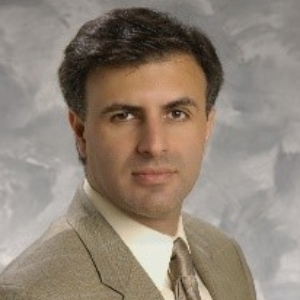
Babak Faramarzi
Western University of Health Sciences, United States
Julia Sidorova
Instituto Carlos III de Salud (CIBER-EHD), Spain
Zuchang Pei
Independent Researcher, Canada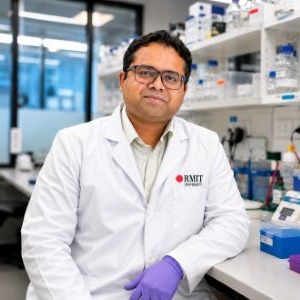
Md Monir Hossain
RMIT University, Australia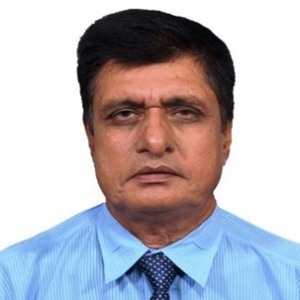
Santosh Kumar Mishra
S.N.D.T. Women's University (Retired), India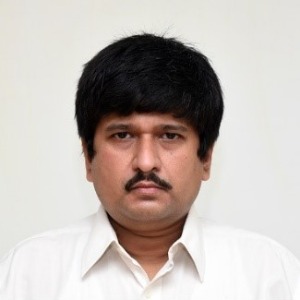
Koustav Sarkar
SRM Institute of Science and Technology, IndiaSubmit your abstract Today


Title : Why do 90% of the drugs fail in development? An analysis of 82+ submissions; and a case study of immunotherapy
Narendra Chirmule, Indian Institute of Technology (IIT), India
Title : Eliminating implant failure in humans with nano chemistry: 45,000 cases and counting
Thomas J Webster, Brown University, United States
Title : Evaluating cell compatibility and subcutaneous host response of silk fibroin–chitosan plug composites as potential resorbable implants
Luis Jesus Villarreal Gomez, Universidad Autonoma de Baja California, Mexico
Title : Steps and strides: Cross-species insights into movement and injury
Babak Faramarzi, Western University of Health Sciences, United States
Title : Ancient wisdom, modern science: Biotech services transforming ayurveda
Prashant Sakharam Bhokardankar, Datta Meghe Ayurvedic Medical College Hospital and Research Centre, India
Title : Scientist’s computational lawyer
Julia Sidorova, Instituto Carlos III de Salud (CIBER-EHD), Spain